Carmina Burana
PLUS George Balanchine's Serenade
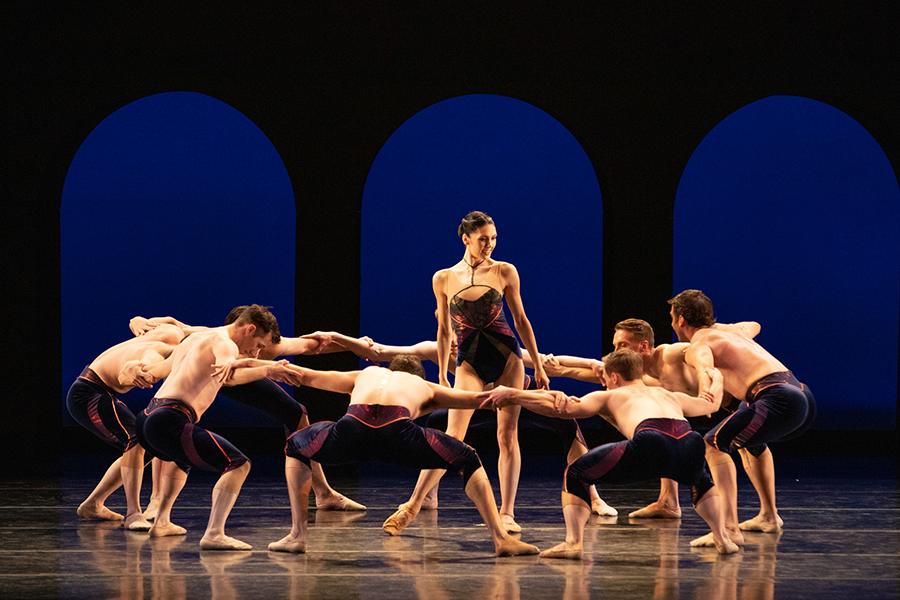
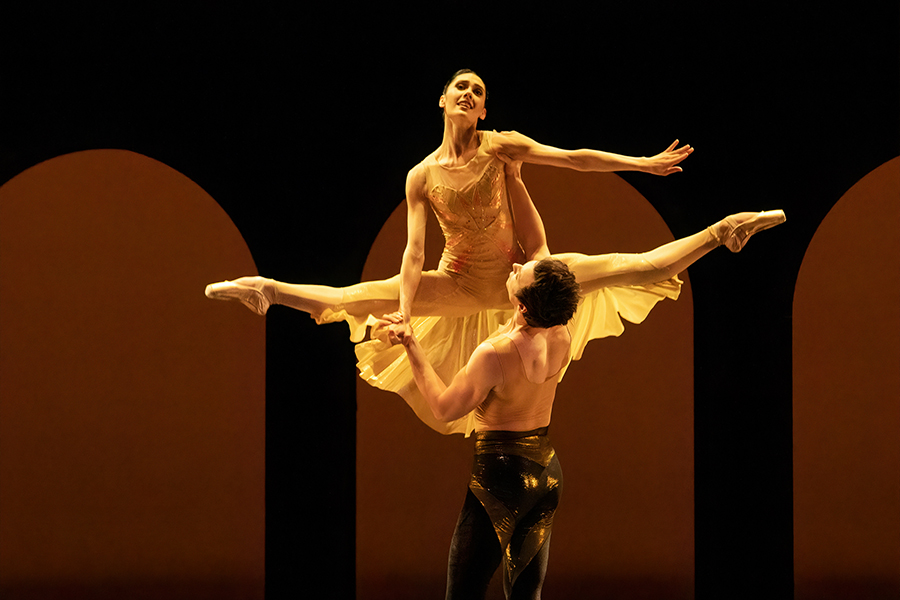
Carmina Burana O Fortuna! Revel in pure artistic spectacle as NBT’s gorgeous dancers, a full orchestra, and a choir of operatic voices come together in a towering program of Carmina Burana. The extravaganza of ballet, music and vocal talents pierce the soul and envelop the audience in a stirring and profound experience. Serenade At once, George Balanchine’s Serenade gently and swiftly fans the flames to ignite an emotional journey. Set to Tchaikovsky’s Serenade for Strings, this Balanchine masterpiece is ethereal and touching in its classic elegance and command of form, known for suspending audiences in its spectacular embrace.
CLICK TO DOWNLOAD CAST INSERTS
Carmina Burana Synopsis
In 1803, in a dusty monastery in Bavaria, a librarian re-discovered a manuscript not seen since the 13th century. Later named the Carmina Burana, the manuscript contained 254 poems and dramatic texts. Believed to be the works of student and clergy, researchers date some of the texts back to the 11th century. Curators who started to transcribe the Latin, German, and French works were surprised to find irreverent, satirical, and sometimes risqué themes, abounding throughout the Carmina Burana.
In 1936, Carl Orff set 24 of the poems to music, quickly turning it into a popular piece of classical repertoire. Just over an hour long, the composition has been featured in film, television, video games, and covered or sampled by Michael Jackson, and even Ozzy Osbourne. During World War II, Orff remained in Germany and continued writing music until his death in 1982, but he never found success again as he had with Carmina Burana.
When choreographer Nicolo Fonte was asked about his approach to creating this version of Carmina Burana, he said, “In tackling an iconic score, such as Carl Orff’s 20th Century masterpiece Carmina Burana, one of my first considerations was scale — how to match the massiveness of this powerful music.
I had always envisioned an integrative production where both music and dance share equal parts. A world of visual beauty set in the lyricism and audacity of this scenic cantata, I liken my version to a medieval etching blasted with 21st Century athleticism and speed.”
Choreographer Nicolo Fonte
Choreographer Nicolo Fonte is known for his unique movement language as well as the highly developed fusion of ideas, dance and design that is a hallmark of his work. A first generation American, Fonte - whose parents emigrated to the US from Argentina, started dancing at the age of 14. He studied at the Joffrey Ballet School in New York, San Francisco Ballet, School of American Ballet and also completed a Bachelor Degree of Fine Arts at SUNY Purchase.
Mr. Fonte received a Choo San Goh award for Almost Tango, his 2002 choreography for Pacific Northwest Ballet. Almost Tango was also voted as one of Dance Europe's "Best Premiere's" when it was re-staged for The Australian Ballet in 2004. His very first full-length work Re: Tchaikovsky, created for The Gothenburg Ballet in 2005, appeared on the "Best of 2005" lists of both Ballett-Tanz and Dance Europe. Since that time, Fonte has created an additional three full-evening works for BalletX: Beautiful Decay (2013), Beasts (2015) and Sidd: A Hero’s Journey (2023) based on the classic novel Siddhartha.
Fonte's choreography has been performed by companies all over the globe – from Tulsa Ballet in the USA to Het National Ballet in Amsterdam to the National Dance Company of El Salvador. In addition to his four original full-length ballets, re-invigorated versions of classic scores and extraordinary collaborations with artists across many disciplines are all well represented in Mr. Fonte's work. From 2002 to 2006 Nicolo enjoyed an ongoing creative partnership with The Gothenburg Ballet in Sweden. From 2013-2023 he was the resident choreographer for Ballet West in SLC and from 2016-2021 he was also the resident choreographer for Oregon Ballet Theatre creating numerous successful works to the repertories of both those acclaimed, as well as many other ensembles.
Serenade Synopsis
A visionary depiction of dancers at play in a moonlit landscape, Serenade embraces its shimmering all-strings Tschaikovsky score with expansive, unexpected formations.
Serenade is a milestone in the history of dance. It is the first original ballet George Balanchine created in America, and is one of the signature works of New York City Ballet’s repertory. Balanchine began the ballet as a lesson in stage technique and worked unexpected rehearsal events into the choreography; a student’s fall or late arrival to rehearsal became part of the ballet. After its initial performance by SAB students on June 9, 1934, on the grounds of the Warburg estate in White Plains, N.Y., Serenade was reworked several times. In its present form there are four movements: “Sonatina,” “Waltz,” “Russian Dance,” and “Elegy.” The last two movements reverse the order of Tschaikovsky’s score, ending the ballet on a note of sadness. Balanchine had a special affinity for Tschaikovsky. “In everything that I did to Tschaikovsky’s music,” he told an interviewer, “I sensed his help. It wasn’t real conversation. But when I was working and saw that something was coming of it, I felt that it was Tschaikovsky who had helped me.”
Choreographer George Balanchine
Born in St. Petersburg, Russia, Balanchine is regarded as the foremost contemporary choreographer in the world of ballet. He came to the United States in late 1933, at the age of 29, accepting the invitation of the young American arts patron Lincoln Kirstein, whose great passions included the dream of creating a ballet company in America. The School of American Ballet, founded in 1934, was the first product of the Balanchine-Kirstein collaboration until October 11, 1948 when the New York City Ballet was born. Balanchine served as its ballet master and principal choreographer from 1948 until his death in 1983.
A major artistic figure of the twentieth century, Balanchine revolutionized the look of classical ballet. Taking classicism as his base, he heightened, quickened, expanded, streamlined, and even inverted the fundamentals of the 400-year-old language of academic dance. Although at first his style seemed particularly suited to the energy and speed of American dancers, especially those he trained, his ballets are now performed by all the major classical ballet companies throughout the world.